
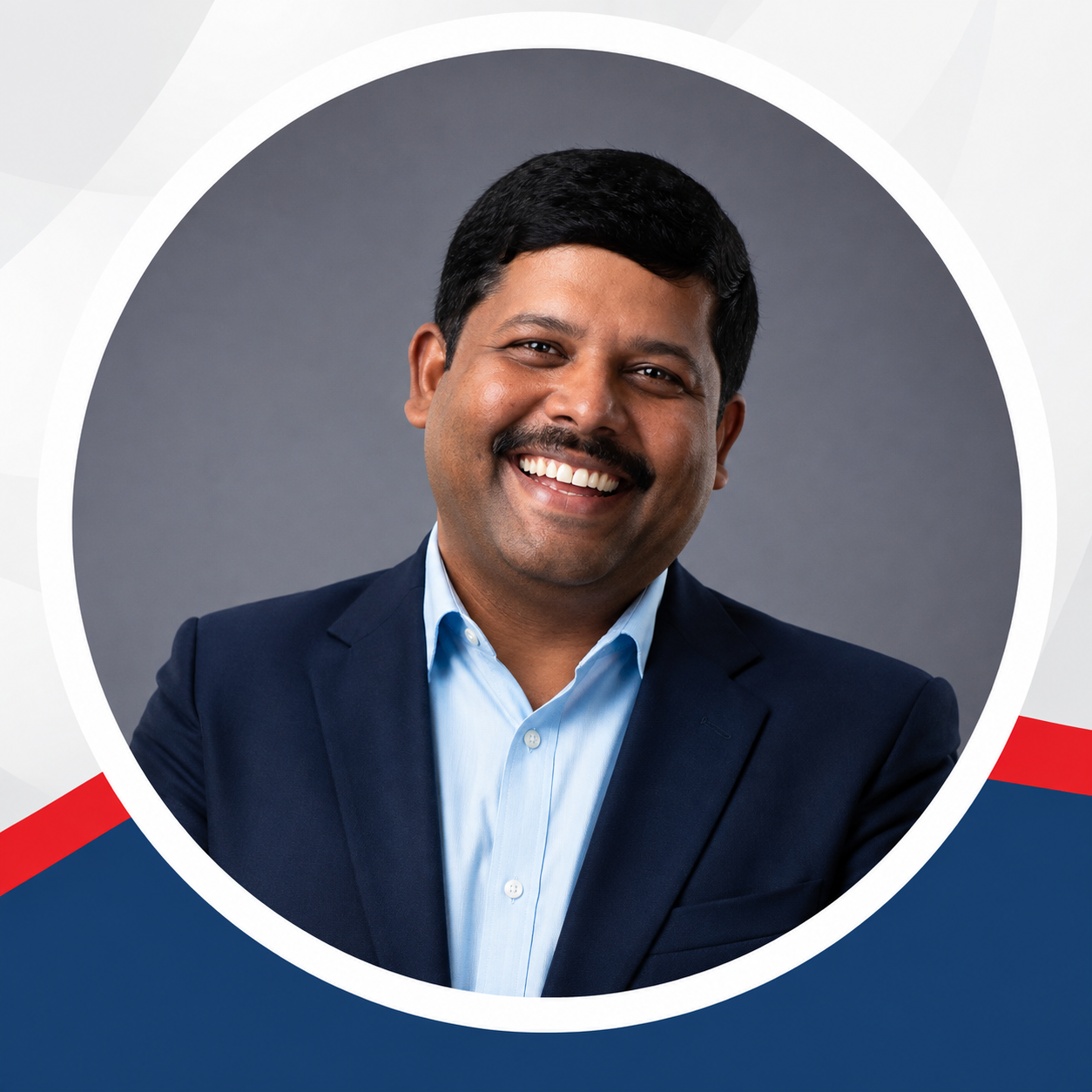
Chief Client Officer, Access Healthcare
How proactive client success turns operational insight, shared roadmaps, and measurable outcomes into long-term partnership
Across healthcare technology and services, the instinct is often to sell clients the future: show them the roadmap, promise the destination, and ask them to make the leap.
After more than two decades of leading client organizations, I have learned why that leap so often falls short. Clients do not operate in the future. They operate within the realities of their current systems, staffing models, payer contracts, operational constraints, and the revenue pressures landing on their desks this quarter.
Great client success begins by understanding where a client stands before recommending where they should go. More importantly, it anticipates what the client will need before they have to ask.
“Meeting clients where they are” can easily sound like a line on a presentation slide. I view it as an operating discipline. It influences how we onboard, how we structure the first 90 days of an engagement, how we govern the relationship, and how we determine whether an organization is ready for its next stage of transformation. Why? Because the strongest partnerships begin with understanding, then possibility.
Here is what that discipline looks like in practice.
Start With Situational Fluency, Not a Sales Deck
The best client success leaders understand a client’s environment more deeply than the client expects them to.
They know which service lines experience pressure at month-end. They understand the workaround the billing team created three years ago but never documented. They recognize the difference between a metric leadership actively manages and one that may be equally important but has not yet received the same level of attention.
That understanding determines what should happen next.
One organization may need to stabilize denials before introducing additional automation. Another may have strong workflows but lack the operational capacity to absorb significant change. A third may have the right technology but insufficient governance to use it effectively.
The correct starting point must be based on the client’s operational reality and not on the solution a partner happens to be selling.
Situational fluency is not a soft-skill accessory. It is the foundation of every credible recommendation. Without it, client teams default to generic advice, and generic advice is how good vendors lose good clients.
With it, a partner stops behaving like a vendor with a support function attached and begins operating as an extension of the client’s own organization.
Own the Roadmap Together, and Never Surprise the Client
Here is a discipline I hold my teams to: clients should not be caught off guard by what comes next.
They should not be surprised by a new capability, an emerging market shift, a change in payer behavior, or an operational risk we could reasonably have anticipated. When we see something coming, we have a responsibility to raise it early, explain its implications, and prepare for it together.
Too many healthcare organizations become caught between a promising pilot and enterprise-scale deployment. The pilot may have demonstrated value, but organizations are often at different stages of maturity in developing the operating model, stakeholder alignment, and execution plan required to move forward.
This challenge can become more pronounced when a partner is highly visible during the sales process, less engaged during implementation, and then reappears only when there is something new to sell.
Strong client success works in the opposite direction.
The roadmap should be co-designed, documented, and revisited through a consistent governance rhythm. Both organizations should understand the priorities, dependencies, decisions, and measures of success. The next recommendation should feel like the natural continuation of an ongoing conversation—not an unexpected sales pitch.
Lead With Expertise and Let Technology Carry the Weight
Scale can tempt services organizations to lose sight of the client’s context: reduce complex needs to service requests, replace judgment with rules, automate every process, and call it efficiency. I have seen that trade-off undermine client outcomes too many times to endorse it.
Our model is expertise-led and technology-enabled—and the order matters.
Technology should carry volume, identify patterns, reduce preventable errors, and free people from repetitive work. Human expertise must remain where judgment matters: interpreting payer behavior, understanding contractual nuances, identifying the root cause behind a denial pattern, or determining when a claim requires intervention rather than another automated rule.
Clients recognize the difference. They can tell when a partner has expanded its capacity without hollowing out its expertise.
The objective is not to remove people from the process. It is to ensure that people spend their time on the decisions where their experience creates the greatest value.
Measure Success in the Client’s Currency
A client success organization can achieve every internal target and still lose the client.
Response times, service-level performance, and satisfaction scores are useful indicators. But they are not the ultimate proof of value.
The proof lives in outcomes the client’s CFO and operating leaders can see and feel: cleaner claims, more efficient front-end processes, fewer preventable denials, faster resolution, stronger collections, and cash arriving with greater consistency.
At Access Healthcare, we anchor our work in improving revenue predictability because predictability is what healthcare finance leaders need in an environment where so little remains stable.
The progression is straightforward, even when the work is not: stabilize the revenue cycle, strengthen execution, improve predictability, and then create the capacity for growth.
That progression also reflects what healthcare organizations should expect from a long-term partner: not simply support for today’s operating model, but the expertise and capabilities required to evolve with the organization over time.
When a client can forecast its performance with greater confidence, we have created meaningful value. When it cannot, no dashboard can substitute for the outcome.
Where Great Client Success Teams Are Heading
The client success function is outgrowing its traditional definition.
For years, the role was largely reactive: maintain the relationship, resolve escalations, protect the renewal, and keep the client satisfied.
The strongest teams now operate differently. They anticipate rather than wait. They advise rather than simply respond. They build around the client’s operational reality, deliver measurable value, and bring forward additional technology, products, and capabilities when those solutions can meaningfully improve outcomes.
That is the organization we are building at Access Healthcare.
We begin by understanding where clients are today. We create clarity around what comes next. And we help them build the operational confidence and capacity required to reach where they want to go.
Because the best client success does not begin when the client raises a concern or asks for the next solution.
It begins well before the client has to ask.
Let’s build something stronger together.
Contact us to explore how our holistic approach to revenue integrity—powered by automation, analytics, and human insight—can support your goals.